
The future of one of the Hunter’s largest coal mines is now in the hands of the Independent Planning Commission (IPC), with supporters and opposition presenting arguments this week over the proposed Hunter Valley Operations (HVO) Continuation Project.
The project, jointly owned by Yancoal and Glencore, would extend the life of the existing open-cut operation near Singleton to 2045 at its northern site, and 2042 at HVO South.
The NSW Department of Planning referred the project to the IPC after receiving more than 50 objections.
Supporters argue that the extension is crucial for protecting jobs and regional communities, while environmental groups contend it would undermine New South Wales’ legislated climate targets.
Mining and Energy Union Northern District President Robin Williams said the mine is one of the Hunter’s final chances to remain a float while heading into the renewable energy transition.
“We’re supporting the expansion of the Hunter Valley Operations mine… It’s about protecting 1,500 direct jobs at that mine,” Mr Williams said.
“Then there’s a large group of supporting contractors, suppliers.
“Thousands of families will be impacted if this extension doesn’t go ahead for that mine.
“We need this operation to continue so that we can have some form of rational transition from where we are today to where we might need to be in the future.”
Environmental advocacy group Lock the Gate Alliance urged the Commission to reject the proposal, arguing the project is incompatible with the state’s climate commitments.
NSW Coordinator Nic Clyde said climate change was already affecting communities and that extending coal mining would increase greenhouse gas emissions.
“It’s very clear that we need to transition away from coal mining and that our entire planet and our community are suffering as a result of unmitigated climate change,” Mr Clyde said.
Mr Clyde said the Hunter’s economy was already beginning to diversify through industries such as green steel manufacturing, pumped hydro energy storage and train manufacturing.
“The challenge ahead is to plan for the future, look after workers and have an orderly closure of these mines as coal demand inevitably reduces,” he said.
The Department of Planning has identified key issues including greenhouse gas emissions, biodiversity, water resources, air quality, noise, social and economic impacts, Aboriginal cultural heritage and mine rehabilitation.
The Independent Planning Commission will consider evidence presented during the hearings, along with written submissions from the public, before making its determination later this year.
BY SARAH BOTRILL
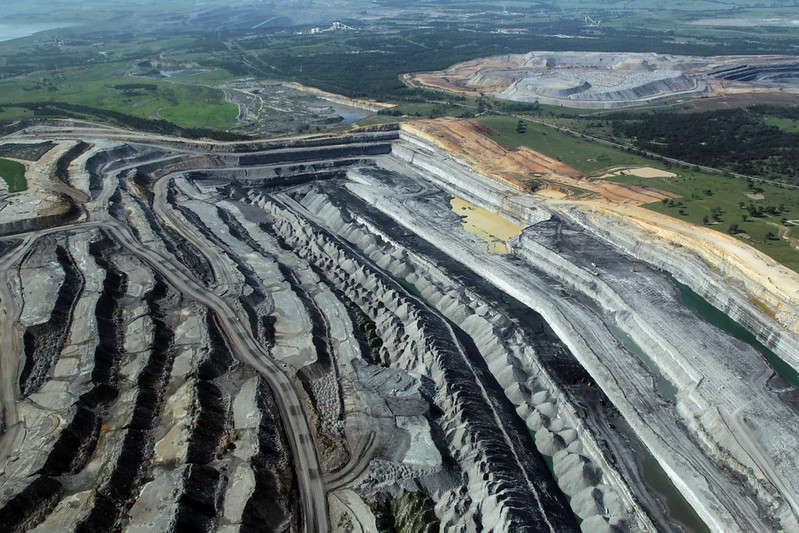
Picture: Lock the Gate Alliance